Allergen Menu Template: Free 14 Allergens Table and Rules
Copy a free allergen table for your restaurant menu, with the 14 UK and EU allergens, the 9 US ones and the simple rules for showing them to guests.
In this article
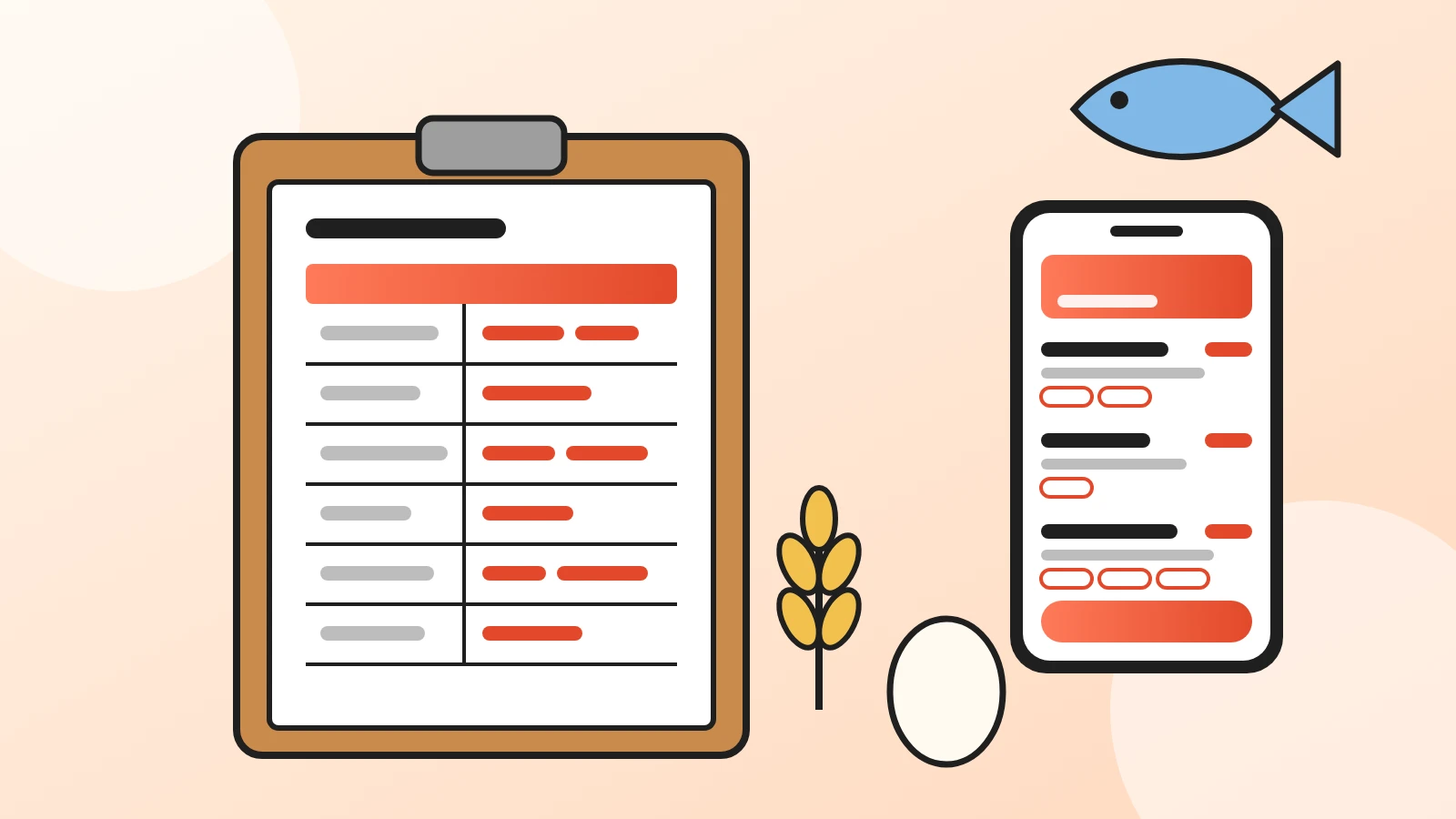
An allergen menu template is a simple table: one row per dish, and next to it the allergens that dish contains. In the UK and the EU, restaurants must tell guests about 14 allergens; in the US, the FDA lists 9 major food allergens. Copy the tables below, fill in one row per dish from your real recipes, and keep it up to date.
This guide gives you both lists, a template to fill in, the rules in plain words and the quickest way to show allergens on your online menu.
What are the 14 allergens? (copy this table)
These are the 14 allergens in Annex II of EU Regulation 1169/2011, which the UK uses too. The second column shows where they often hide in a restaurant kitchen. It's a reminder, not a full list, so always check your recipes and your suppliers' labels.
| # | Allergen | Often found in |
|---|---|---|
| 1 | Cereals containing gluten (wheat, rye, barley, oats) | Bread, pizza dough, pasta, breadcrumbs, batter, beer |
| 2 | Crustaceans | Shrimp, prawns, crab, lobster, some stocks |
| 3 | Eggs | Mayonnaise, fresh pasta, desserts, egg wash on buns |
| 4 | Fish | Anchovies, fish sauce, Caesar dressing |
| 5 | Peanuts | Satay sauce, some Asian dishes, desserts |
| 6 | Soybeans | Soy sauce, tofu, edamame |
| 7 | Milk | Butter, cheese, cream, yogurt |
| 8 | Tree nuts (almonds, hazelnuts, walnuts, cashews, pecans, Brazil nuts, pistachios, macadamias) | Pesto made with nuts, praline, almond flour, cakes |
| 9 | Celery | Soups, stocks, sauces, salads |
| 10 | Mustard | Dressings, marinades, sauces |
| 11 | Sesame | Burger buns with seeds, tahini, hummus |
| 12 | Sulphur dioxide and sulphites (above 10 mg/kg or 10 mg/l) | Wine, dried fruit, some vinegars |
| 13 | Lupin | Lupin flour in some breads and pastries |
| 14 | Molluscs | Mussels, clams, squid, octopus, oyster sauce |
Allergen menu template (copy and fill in)
Many restaurants find one row per dish easier to read than a big grid with 14 columns, especially on a phone. Here's the template, with two filled-in rows as an example of the format:
| Dish | Contains | May contain | Last checked |
|---|---|---|---|
| Margherita pizza | Gluten (wheat), milk | (date) | |
| Hummus with pita | Sesame, gluten (wheat) | (date) | |
How to fill it in:
- Work from the recipe card, not from memory. Include sauces, dressings, garnishes and the oil used for frying.
- Check suppliers' labels: a ready-made stock or sauce can bring in celery, mustard or milk.
- Name the allergen clearly: "tree nuts (walnuts)" tells a guest far more than "nuts".
- Use "May contain" only for a real risk, like a shared fryer.
- Write the date and check the row again every time a recipe or a supplier changes.
What are the rules in the UK and the EU?
In the EU, Regulation 1169/2011 makes allergen information mandatory for food that is not prepacked, including meals in restaurants (Article 44). Each country then decides how it must be shown, which is why the rules differ a little from place to place:
- UK (England, Wales and Northern Ireland): you can give allergen information in writing, on a menu, a board or an information pack, or by staff, as long as a written notice in a visible spot tells guests to ask. The Food Standards Agency's best practice since 2025 is written information plus a conversation.
- France: the information must be written and readable by guests without having to ask staff.
- Italy: allergens go on the menu, a register or a sign; if you use a digital system, you also need written records on site.
- Spain: written or, under conditions, by staff, with a visible notice and written records.
Selling for delivery or pick-up? In the UK, guests must get allergen information before they pay and again when the food arrives. Your online menu covers the first step.
What about the US?
The FDA lists 9 major food allergens: milk, eggs, fish, crustacean shellfish, tree nuts, peanuts, wheat, soybeans and sesame, which became the ninth on January 1, 2023. The federal allergen labeling law is written for packaged food, so restaurant rules depend on your state and city. If you serve guests from the US and Europe, the 14-allergen table above already covers all 9.
How do you show allergens on an online menu?
A digital menu for restaurants makes allergen updates easy: change a recipe, edit the dish and the menu is up to date, with no reprinting. In Acuolina:
- Tick the allergens on each dish. Open the dish and go to the Allergens section. Pick everything it contains, and for gluten and tree nuts also pick the exact cereal or nut. The list has all 14 allergens and natural latex, plus lactose and alcohol under "Other warnings".
- Guests see them under the dish name, as "Contains: gluten (wheat) and milk", in the same size and color as the name and never cut short. The line shows again when they open the dish.
- Don't skip a dish. A dish with nothing ticked shows no allergen line, so go through drinks and desserts too.
- Write "may contain" in the description, and only when there's a real risk, like a shared fryer.
- Add labels like gluten free, vegan or nut free when they're true. They help guests choose at a glance, but they don't replace the "Contains" line.
- Keep the menu and your table in step. When a recipe changes, update the row and the ticks on the same day.
Then put the QR code on the tables; our QR code menu guide shows where it works best. Keep the printed table at the counter for guests without a phone and for staff.
What mistakes should you avoid?
- "Ask staff" with no written backup. Even where verbal information is allowed, staff need a written source to check.
- Only listing what's in the dish name. Butter in the sauce or egg wash on the bun is where problems start.
- Forgetting drinks and desserts. Wine has sulphites, many desserts have eggs, milk and nuts.
- An old table. A new supplier can change a dish's allergens overnight.
Where to go next
If you take orders from the menu, guests can also send them straight to you: see QR code table ordering and commission-free online ordering. Running a pizza shop? Our pizza and burger menu guide covers sizes and half-and-half. Comparing tools? Start with the free QR code menu options, then share your menu on Google and Instagram. Plans are on the pricing page, and you can create your free menu in a few minutes.
Frequently asked questions
What are the 14 allergens?
Cereals containing gluten, crustaceans, eggs, fish, peanuts, soybeans, milk, tree nuts, celery, mustard, sesame, sulphur dioxide and sulphites (above 10 mg per kg or litre), lupin and molluscs. They come from Annex II of EU Regulation 1169/2011, and the UK uses the same list.
Do restaurants have to list allergens on the menu?
In the UK and the EU you must tell guests if a dish contains any of the 14 allergens. In the UK it can be written, or given by staff with a clear written notice telling guests to ask. Some EU countries are stricter; France, for example, asks for written information guests can read without asking. In the US, the federal allergen labeling law covers packaged food, so check your state and city rules.
Do I need to show "may contain" warnings?
In the EU they are voluntary. Use them only when there is a real risk, like frying everything in the same oil, and don't put them on every dish, or guests with allergies stop trusting the menu.
How do I add allergens to a digital menu?
In Acuolina, open the dish and tick its allergens in the Allergens section. For gluten and tree nuts, also tick the exact cereal or nut. Guests then see a line like "Contains: gluten (wheat) and milk" right under the dish name, and again when they open the dish. Labels like gluten free or nut free still help, but they don't replace the allergen line.
Is a QR code menu enough for allergen information?
In many places it helps but isn't enough alone. Not every guest has a phone at hand, and some countries, like Italy, also ask for written records on site. Keep a printed copy of your allergen table in the restaurant and train staff to use it.
Is Acuolina free?
Yes. The free plan has unlimited menus, a QR code and up to 50 orders a month by WhatsApp or text message with no commission. The Chef plan, at $19 a month, adds unlimited orders and discounts sent to your customers by email and SMS, and every new restaurant gets 14 days of Chef free, no card needed.
Keep reading
QR menus
QR Code Menu: How to Make One in 6 Steps (2026)
How to make a QR code menu in 6 steps: what to put on it, where to place the code, the mistakes that send guests back to paper, and how to take orders.
QR menus
Digital Menu for Restaurants: The 2026 Guide
What a digital menu is, what it costs, how it differs from menu screens, and how to set one up with QR codes and commission-free ordering.
QR menus
Digital Menu for Pizza Shops and Burger Joints
How to set up sizes, half-and-half pizza, crusts, doneness, add-ons and combos on a digital menu that takes orders by WhatsApp or text.
Your first direct order, tonight.
Create your menu in minutes and get every Chef feature free for 14 days. Then stay on Basic for free, or upgrade.